




Reversing Excessive Torsion
It has been established that there are two halves of the body, and each organizes relative to where the perceived center is — either shifted right or left of actual. (There is also a front to back component, but that’s for a future post.). One hip that likes to drop the body down and squat, and the other likes to keep the body up and hinge. Add this to the lateral component of center shifting, and we get the robust formation of a systemic spiral.
Like most things, the parameters of reality are bound by what you are able to pay attention to. It is also confined to that which you can consistently tune-in to and spend time with to get to know. Can you see what is happening without trying to change it? Then, can you tell when a something (perhaps that something) has tipped past an option and into detrimental dominance? Finally, when enough evidence has piled up to confirm this suspicion, how do you not “force” its opposite and un-do without excessive tension simply tipping you toward a contrary inefficiency?
The answer is delicately, and with a sincere desire to understand. I used to rush to be ‘right’. But there’s very little sense in the finality of that stance. It creates a blindspot, and horribly so, one that holds the closed conviction of continued justification.
A case in point is when I casually stated, in bold arrogance that doubled as contrasting point of clarity, that “because [the closer to perceived center half] is weight-accepting, it does not have to learn to push down.” I compounded this dismissal with the insightful yet-left-for-dead statement: Gravity fools us into believing that being pulled downward is the same as pushing down. I’ve spent the better part of the last six months un-fooling myself into what this actually means (and feels like).
The how involved using that squat as a daily orienter, noticing and feeling and refining, again and again, with light weight (never clearing body weight) to seek for new means of efficiency (sometimes found by honing in on an inefficiency). Some call this repetition without repetition. The words I would use are, “learning yourself through the pattern of a particular thing.” It’s not just the parts that curiosity studies, but the relation between them.
Because interest in details only matter on a personal level, I’m going to attempt to flush this process out through a non-body analogy and then through a movement example of my personal practice. Please note that what I am delivering is a fraction of a fraction of what it actually took to experience this concept as truth. Understanding my body (and myself) is not something I wish to check off and be finished with. It is what I wish to consume and coalesce with, choosing it again and again as a priority of the time I am given.
The Analogy
A maple tree I planted, outside of my kitchen window. I look at it often. Since I decided to plant it there I feel equally responsible for its growth and care (I wanted to say happiness, but stopped myself). Before I point to anything, please simply note what you see:
The tree is set in a wave or spiral. It has been ‘trained to do so. The wind wants to push it left-looking. I deemed it TOO lopsided and anchored it using twine to a metal pole in the ground. The tree grows up and the ‘correcting’ anchor is set down. The younger, shorter tree had a lower tether point (those with excellent eyes will notice a tan-twine colored attachment at the bottom that turns black at the top). I didn’t have another sturdy anchor lying around, so the easiest thing to do was keep utilizing what I had effortless access to. I added length using an available shoelace and fastened it to a point that seemed both strong enough to hold AND minimize the excessive curve.
[That paragraph says a heckuvalot about how we operate. Perception, efficiency, judgement, faultiness, and trust all apply.]
The Movement
I had flashes of this tendency multiple times, but this was the first I deemed capture-worthy, particularly because I chose for it to be the manipulative focus of that day. Recording tends to bring out the dramatic flair of exaggeration, but it still provides a structural snapshot of how things stack and rotate around each other:
Seeing it emphasized the feeling of ‘offness’ that made me want to work on it.
The strategy to ‘get out of it’ comes almost entirely from the non-ankle braced lower half. This is moving more toward the middle and the system as a whole, but still a large gap in progress. In short, the left or ankle braced leg rotates outward through the hip. It hinges and stays high. It avoids the pelvis. The ribs, too, follow the angle of that foot…
In keeping with that opening still, though, what do you see? Where are your eyes drawn?
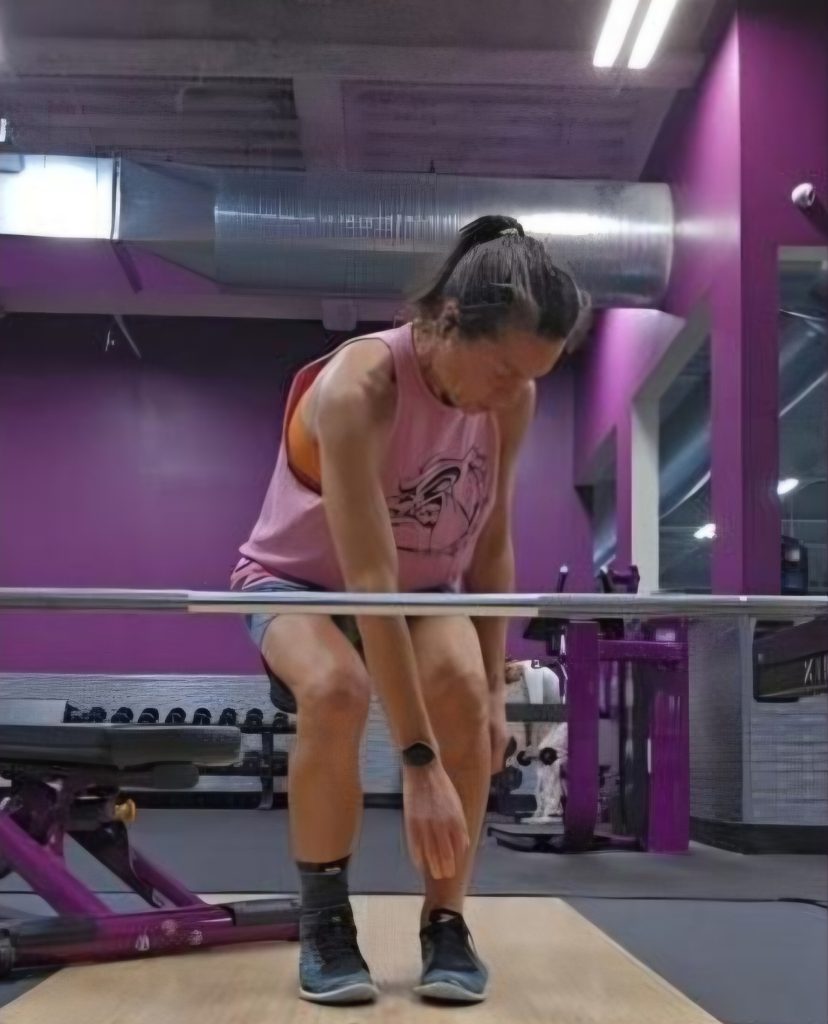
For me it’s the feet and shins:
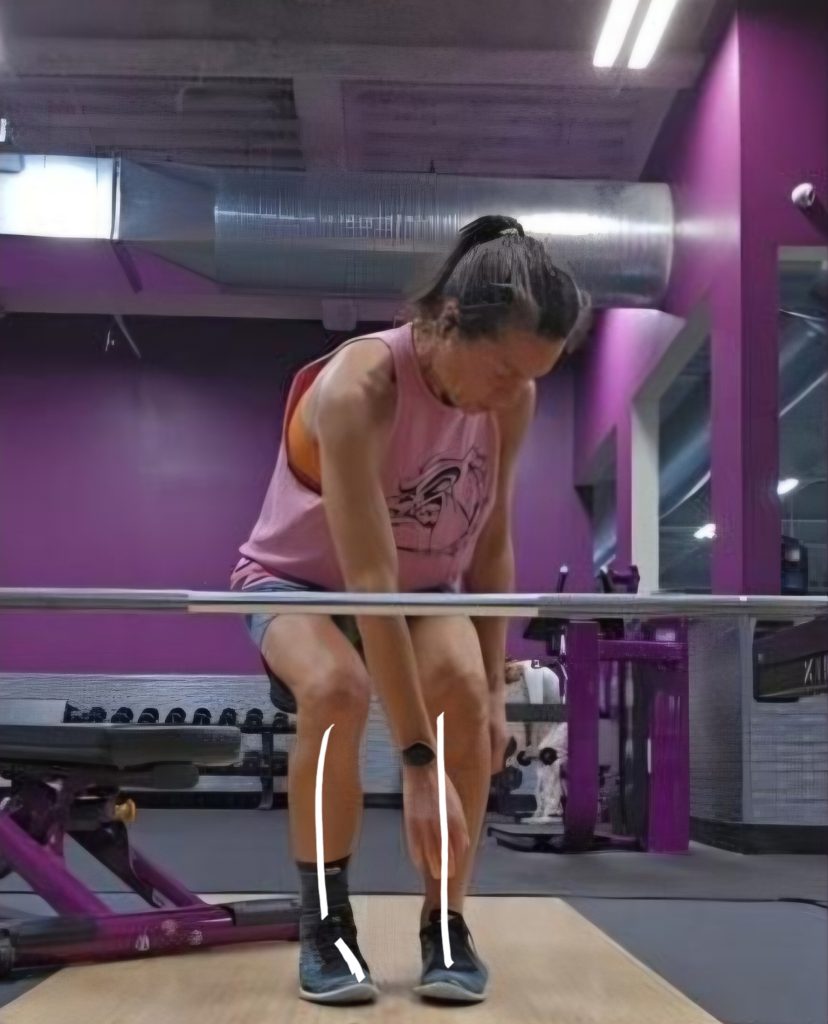
The hips jut out left and take the center with it. (It is indeed consequential that I am reaching with that left hand.). The shoulder drops forward and down. A collapse forms. But a strategy that has worked in the past will continue to be used until it is replaced, and that intention (and annoyance?) to re-program takes time and energy and exertion. It must become familiar with this new position and be able to utilize it in a more effective manner. Application, at a systemic-shifting level, often depends on unlearning as vitally as it does learning something new.